Pharmaceutical Care in Aboriginal Health with Larry Leung and Jason Min
Faculty of Pharmaceutical Sciences – PHAR 457: Pharmaceutical Care in Aboriginal Health
What are some of the key learning outcomes for this course?
The global goal of this course is for students to work effectively, respectfully and collaboratively with Aboriginal peoples in the context of providing culturally-safe pharmaceutical care. Other outcomes include self-reflection and growth of cultural humility, de-colonizing the negative lens with the Aboriginal voice, understanding the historical context and generational issues that occur in Aboriginal health in Canada, enhancing library search skills specific to research in Aboriginal health, and exploring successes and challenges seen in selected health topics in the Aboriginal population.
“Students get to see from the perspective of a knowledge keeper… what medicine means from an aboriginal perspective; how they use the land for healing purposes.”
How has the UBC Farm assisted you in meeting these specific learning outcomes?
The UBC Farm and the Traditional Medicines Walk has been a source of tremendous knowledge for our students while also providing an immersive and impactful experience. Students enrolled in PHAR 457 spend an hour and a half at the UBC Farm and participate in activities including: a song and smudging ceremony, a review and walk-through of the Indigenous plant exhibit led by a knowledge keeper, and an individual activity that highlights the different plants including medicinal/traditional uses, taste, smell and other identifying features.
The decision to bring students to the UBC Farm is made easy by the willingness and availability of the knowledge keepers who are able to share their expertise. Pharmacy students are exposed to natural health products elsewhere in the curriculum, but never with the Aboriginal voice in a holistic and immersive view.
“The experience with the knowledge keeper and Farm is amazing. Students are so excited to see and physically touch and taste the natural medicines that they learn about in class. This creates a very visceral experience that brings the classroom to life.”
What curricula material, activities or approaches do you utilize in this course that further develop students’ learning of the key learning outcomes?
We use a variety of different approaches to diversify our student learning experience including:
- Educational trips (e.g. UBC Farm, Museum of Anthropology, Xwi7xwa Library)
- Podcasts and video recordings made specifically for the class (e.g. library search tutorial, impact of colonialism on health
- Live, technology-enabled video conferences with elders and community members across BC
- Guest lecturers from knowledge keepers and experts
- Student-led and peer-marked journal clubs
- Reflexive photography assignment to build self-awareness and growth of cultural competency
- Community-based final projects that are linked to current opportunities available upon graduation from the First Nations Health Authority
 Larry Leung, BSC (Pharm), RPH, Lecturer
Larry is a lecturer and pharmacist in the Faculty of Pharmaceutical Sciences at UBC. As a pharmacist, he works at the Faculty’s Pharmacists Clinic, a licensed, pharmacist-led patient care clinic. His responsibilities include providing direct patient care and leading innovative projects in collaboration with First Nations communities in British Columbia. As a lecturer, his academic interests include interprofessional education, Aboriginal health, and contemporary issues in pharmacy practice.
 Jason Min, BSC (Pharm), RPH, Lecturer
Jason joined the Faculty of Pharmaceutical Sciences at UBC in 2013 in both an academic role and as a pharmacist clinician with the Pharmacists Clinic. Having coordinated and lectured a variety of topics, Jason’s academic areas of interest include First Nations health, interprofessional team-based care, and technology in health care. In his work, Jason specializes in developing, implementing, and managing innovative community pharmacy services and team-based care.
ENRICHING CURRICULUM THROUGH INDIGENOUS KNOWLEDGE
Geography Vancouver Summer Program with Julian S. Yates
Geography Vancouver Summer Program with Julian S. Yates
Faculty of Geography – Geography Vancouver Summer Program (VSP): Environment, Resources, and Sustainable Development
What are some of the key learning outcomes for this course?
As a summer course for international students, mainly from China, the course was designed as an introduction to thinking about sustainable development in Canada. Field trips were organized to help students think through sustainability problems in real-world contexts. They were expected to conduct research during the field trips in order to write a field trip report that engaged critically with that week’s theme. The UBC Farm visit was included in a week where the focus was on the politics of land and food.
How has the UBC Farm assisted you in meeting these specific learning outcomes?
Given that this was the first time in Vancouver for the students, the UBC Farm trip gave us the opportunity to explore the UBC campus and the wide variety of grounded research being conducted at UBC. The trip helped to develop an understanding of some of UBC’s history, in an intellectual and political-economic sense. It also helped to give a sense of what Canadians think is important in the context of food production and agricultural research, and enabled the students to engage directly with UBC Farm employees and researchers.
What curricula material, activities or approaches do you utilize in this course that further develop students’ learning of the key learning outcomes?
The field trip was designed as part of a critical investigation for the students. Although UBC Farm employees were unaware of this, the students were asked to be proactive in asking questions so as to help develop a critical field trip report on the theme of land and food (we also visited the Sole Food Street Farms and the Yale Town Farmer’s Market). So the trip was designed to help teach research methods and critical thinking while in the field and in placing field observations into broader debates and contexts.
What has been your experience in utilizing the farm with your students?
The tour provided by the farm was a good introduction to the farm’s activities, and engaged in some useful, relevant topics – such as how UBC Farm has been defended against urban development over the years. The Farm was a particularly useful destination, as we could walk to the farm and back within the 3-hour class time period.
 Julian S. Yates, PhD – Sessional Instructor and Post-doctoral fellow
Julian is a Post-Doctoral Fellow in the Institute for Resources, Environment, and Sustainability and a member of the Program on Water Governance team. Julian has more than a decade of experience working in the field of international development geographies, including graduate level research and employment with international development NGOs. Julian’s work focuses on the intersection between the politics of knowledge and social mobilization for overcoming poverty and inequality. His current work explores the rollout of small-scale water filtration facilities among BC’s First Nations communities – an approach that gained political expediency due to the recently introduced Water Sustainability Act.
ENRICHING INTERNATIONAL STUDENT LEARNING AND ENGAGEMENT
April 5: Developing the first Qatar National Food Guide with Dr. Barbara Seed
April 5: Developing the first Qatar National Food Guide with Dr. Barbara Seed
April 5, 2017 1:30p.m. – 2:45 p.m. CIRS, Policy Lab.
Sustainability Principles in the First Qatar National Food Guide
About the talk:
Is a healthy diet a sustainable diet? Sustainable diets have the potential to unite nutrition, food systems, healthy ecosystems, and the challenge of zero hunger. Centering on the consumption aspect of the food system, Dr. Barbara Seed’s work examines evidence-based recommendations for sustainable diets that promote both human and environmental health. This event will review how sustainable diets are defined and measured, how current sustainability recommendations have been translated into a handful of national dietary guidelines, and where recommendations can be incorporated into other levels of food policy.
About the speaker:
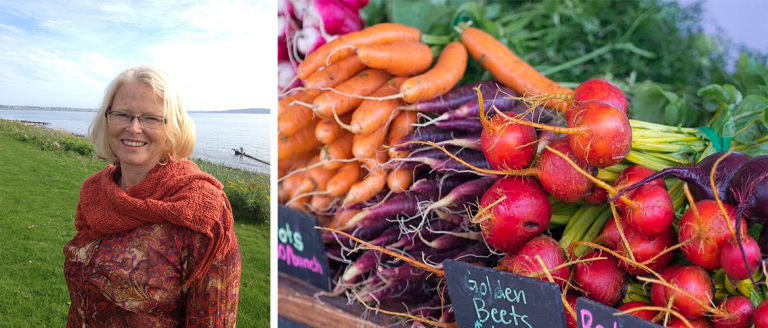
When Dr. Barbara Seed was hired to develop the first dietary guidelines (food guide) in Qatar in 2013, she succeeded in making them one of the first in the world to include sustainability principles. Barbara is a Registered Dietitian with over 30 years of experience working in public health nutrition. In her work and volunteer capacities, she has straddled many sectors: government (national, provincial and municipal levels); civil society (anti-hunger and food system organizations) and academia (teaching, research, supervision, and publishing). Barbara is currently working as a consultant in food and nutrition policy, focusing on integrating nutrition, food systems, and the environment.
Free and open to the public. Event queries: ubcfarm.academic@ubc.ca
March 30, 2017: Through the bees’ eyes: seeking food system sustainability with Dr. Claire Kremen
March 30: Through the bees’ eyes: seeking food system sustainability with Dr. Claire Kremen
March 30, 2017, 12:30 p.m. – 1:30 p.m. Aquatic Ecosystems Research Laboratory.
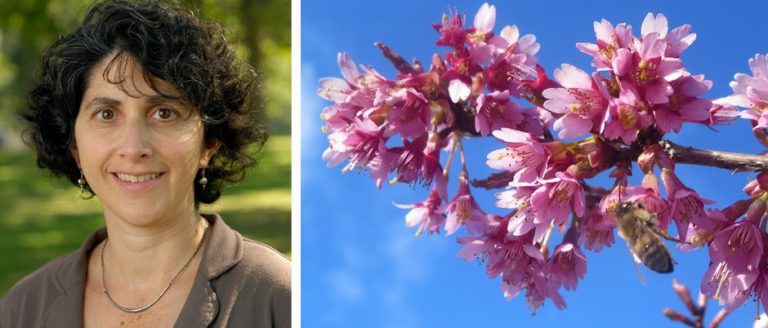
About the Talk:
Dr. Maltais-Landry’s talk will focus on how optimal nutrient management is a critical aspect of sustainable farming systems, where nitrogen (N) and phosphorous (P) must be supplied in sufficient quantities to maximize crop yields and maintain soil fertility while preventing over-fertilization that results in environmental degradation. Organic amendments – manures and composts – and cover crops recycle N and P within farming systems, reducing the use of mineral fertilizers while potentially lowering nutrient losses to surrounding ecosystems. The aim of Gabriel’s research is to optimize the user f organic amendments and cover crops to maximize yields and balance eN and P budgets in intense agroecosystems. Using several experiments established at the UBC Farm, several trade-offs were identified among crop productivity, balanced N and P budgets, and greenhouse gas emissions (GHG), where treatments with the highest yields resulted in N and P over-fertilization and higher GHG emissions. In addition, there was little evidence that cover crops prevented wintertime N leaching from occurring, although cover crops contributed to N cycling nevertheless. Overall, my research highlights the inherent challenges in balancing N and P while maintaining high yields when using organic amendments and cover crops as primary sources of fertility in intensive vegetable farming systems.
About the Speaker:
Gabriel Maltais-Landry is a postdoctoral fellow at UBC ‘s Faculty of Land and Food Systems. He works primarily with the Sustainable Agricultural Landscapes Lab and Centre for Sustainable Food Systems.
Free and open to the public. Event queries: ubcfarm.academic@ubc.ca
March 29: “What is this thing called organic?” with Dr. Verena Seufert
March 29: “What is this thing called organic?” with Dr. Verena Seufert
March 29, 2017, 1:00 p.m. – 2:00 p.m. Liu Institute for Global Issues.
What is this thing called organic? How organic farming is codified in regulations
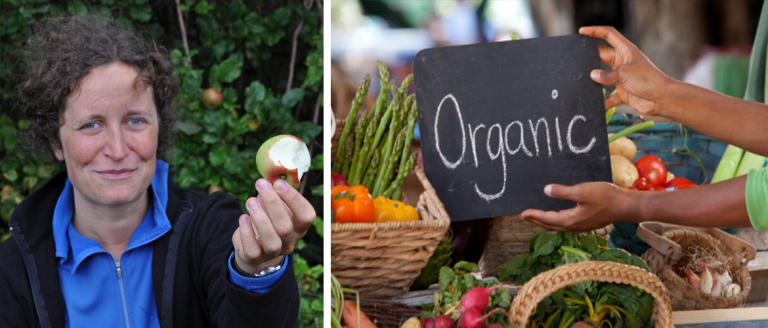
About the Talk:
Organic farming is one of the fastest growing sectors of world agriculture. Although it represents only 1% of world agricultural area, organic is one of the most recognized food labels and most people in developed countries consume some amount of organic food today. There is a wide range of interpretations of what organic means by different actors in the sector.
This event will expand on Dr. Seufert’s research examining different organic regulations from across the world to understand how they have codified the large diversity of ideas inherent in organic agriculture.
About the Speaker:
Dr. Seufert is a Post-Doctoral Fellow in UBC’s Land Use and Global Environment Lab. She is a geographer-ecologist interested in all things food and nature. Verena believes that food is what connects us in the most fundamental ways with nature. We depend on ecosystems, and we impact ecosystems through the way we produce, prepare and eat our food. Food defines our health, our cultures, our communities, and it defines our environmental footprint.
Free and open to the public. Event queries: ubcfarm.academic@ubc.ca
March 23: Wastewater Reuse in Peri-Urban Bangalore with Dr. Bejoy K Thomas
March 23: Wastewater Reuse in Peri-Urban Bangalore with Dr. Bejoy K Thomas
March 23, 2017, 12:30 p.m. – 1:30 p.m. Aquatic Ecosystems Research Laboratory
Whose water? Challenges and complexities in wastewater reuse in peri-urban Bangalore, India
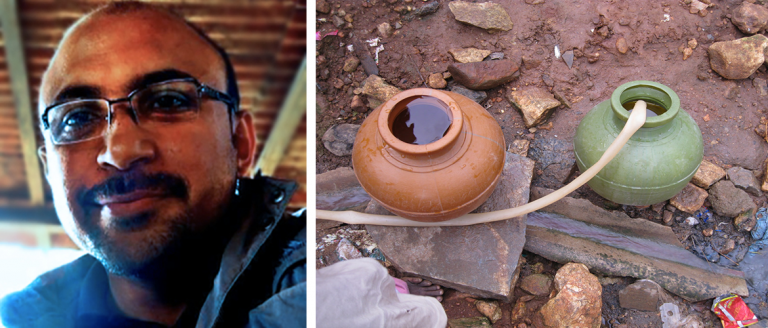
About the Talk:
Wastewater reuse has become an accepted practice in cities and peri-urban areas. However, in developing country settings, wastewater reuse presents multiple challenges. First, water treatment infrastructure is limited, implying that water reused may not meet the required water quality standards. Second, food crops grown in peri-urban areas and irrigated with contaminated urban wastewater pose a health risk. Third, in water-stressed cities, demand for wastewater may result in competing claims over it and lead to or aggravate conflicts between various users, such as urban residents and peri-urban farmers. I will draw upon research conducted in the water-stressed city of Bangalore (also known as Bengaluru) in India and its peri-urban areas to illustrate these issues. In particular, I will focus on how peri-urban agriculture in the region has changed over the last 20 years, the role of urban wastewater and possible contestations around it.
About the Speaker:
Bejoy K Thomas is a social scientist, and Fellow in the Water, Land and Society program at Ashoka Trust for Research in Ecology and the Environment (ATREE), Bangalore, India. Bijou has a Masters in Economics (Cochin, 2001) and a Ph.D. in Development Studies (Tilburg, 2009). He has a strong record of conducting problem-driven research and working in interdisciplinary teams along with environmental scientists and engineers. His early work was on multidimensional poverty and participatory development. He has recently been part of a large research initiative on water in urbanizing areas, looking specifically at peri-urban areas and villages around Bangalore. For more information on this work, please visit- http://www.atree.org/research/ced/lwl/ACCUWa
Free and open to the public. Event queries: ubcfarm.academic@ubc.ca
March 17: Worker Justice with Restaurant Opportunities Centre United with Anthony Peeples & Dr. Jill Bucklaschuk
March 17: Worker Justice with Restaurant Opportunities Centre United with Anthony Peeples & Dr. Jill Bucklaschuk
March 17, 2017, 12:30 p.m. – 1:30 p.m. CIRS, Policy Lab.
Worker justice & food security: Insights from Chicago’s Restaurant Opportunities Centers United and University of Guelph’s research on temporary migrant workers in Canada.
About the Talk:
With over 13 million workers, the restaurant industry is one of the nation’s largest private-sector employers as well as one of the fastest growing segments of the economy in the United States. Unfortunately, the industry is also the lowest paying, continues to offer few to no benefits and has created industry “unofficial” standards that violate labor and human rights laws.
Restaurant Opportunities Centers United (“ROC United”) is a workers center that was born out of the 9/11 terrorist attacks and tragedy in New York City. It has grown to 18,000 restaurant worker members, 200 high-road employer members, and thousands of consumer members throughout the United States. ROC United has helped win more than a dozen workplace justice campaigns against exploitative high-profile restaurant companies, retrieving over 10 million dollars for workers and improving workplace policies for restaurant workers. Its mission is to improve wages and working conditions for the nation’s restaurant workers.
About the Speakers:
Anthony Peeples is a gruff stubborn idealist. His organic draw to labor started when he was younger, playing in punk bands and reading semi-class-conscious materials like “Profane Existence”. An organizer at heart; Anthony has been involved in the labor movement for nearly a decade. In that time, he has organized as a worker leader for a broad range of labor organizations; a traditional union, a modern organizing union, a radical union and a workers center. Anthony has experienced a broad a range of tactics and strategies to win victories for worker power. His passion lies in rank and file unionism and opposing efforts to weaken a pro-organized worker future. Anthony is a member leader of ROC-Chicago working on the One Fair Wage campaign to phase out and eliminate the sub-minimum wage for restaurant workers.
Anthony will present some reflections on his experience as a ROC leader in Chicago. The first reflection will consider previous experiences on the Illinois and Indiana border as a local labor activist, running through the ranks of union member and development and growth from a member to leader of ROC Chicago. The second reflection will consider the growing influence of workers centers in the labor movement; briefly touching on the unique alliance of eight workers centers in the Chicago area.
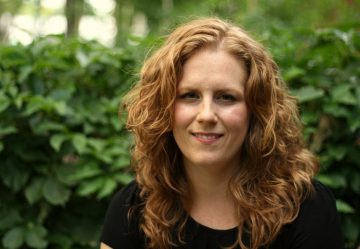
Jill Bucklaschuk is a Social Sciences and Humanities Research Council of Canada postdoctoral fellow at the University of Guelph in the Department of Sociology and Anthropology. Her work uses qualitative research methods to examine how non-permanent legal status impacts the social and workplace experiences of lower skilled temporary migrants as they negotiate settlement in Canada.
March 1: We Were Healthier When it Used to Rain with Dr. Angela McIntyre
March 1: We Were Healthier When it Used to Rain with Dr. Angela McIntyre
March 1, 2017, 12:30 p.m. – 2:00 p.m. Liu Institute for Global Issues.
We were healthier when it used to rain: Participatory Food Security Research with Rural South African Communities
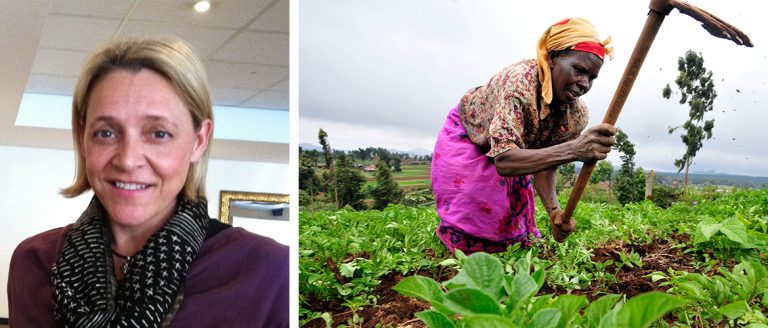
About the Talk:
Although nutrition transition explains to some degree the phenomenon of ‘hidden hunger’ observed in poor, former homeland communities, rural livelihoods in South Africa are complex and shifting. People’s interpretations of hunger and malnutrition in their own communities reveal the localized constraints and capabilities that can make top-down, one-size-fits-all policies and strategies ineffective and local institutions unaccountable. Engaging people in the joint diagnosis of their food security challenges generates information on the environmental, economic and cultural conditions that shape experiences of hunger and influence nutrition outcomes, which is not always captured in conventional food security assessments. More participatory approaches add validity to research and may open doors to promoting ‘food citizenship’ and improving government accountability where the right to food is constitutionally guaranteed.
About the Speaker:
Angela McIntyre has over 20 years of hands-on international development and policy research experience in the health, social and human security sectors. Her fields of research and practice have included public health systems and maternal and child health), nutrition and livelihoods, children in armed conflict and military privatization, among other human rights and advocacy themes. Angela has worked with government ministries, United Nations agencies, bilateral donor organizations, post-secondary education institutions and international and local non-governmental organizations in different countries and cultural contexts throughout sub-Saharan Africa. Angela is currently a Ph.D. candidate at the faculty of Natural and Agricultural Sciences conducting research on food security in Southern Africa.
Free and open to the public. Event queries: ubcfarm.academic@ubc.ca
LFS 496 Supervisor Profile: Mel Sylvestre, Perennial & Biodiversity Coordinator, and Seed-Hub Coordinator
Program Supervisor Profile: Mel Sylvestre, Perennial & Biodiversity Coordinator, and Seed-Hub Coordinator
*Disclaimer: The Career Development in Land and Food Systems course is the updated title of the previously-named Career Development in Land and Food Systems Internship.
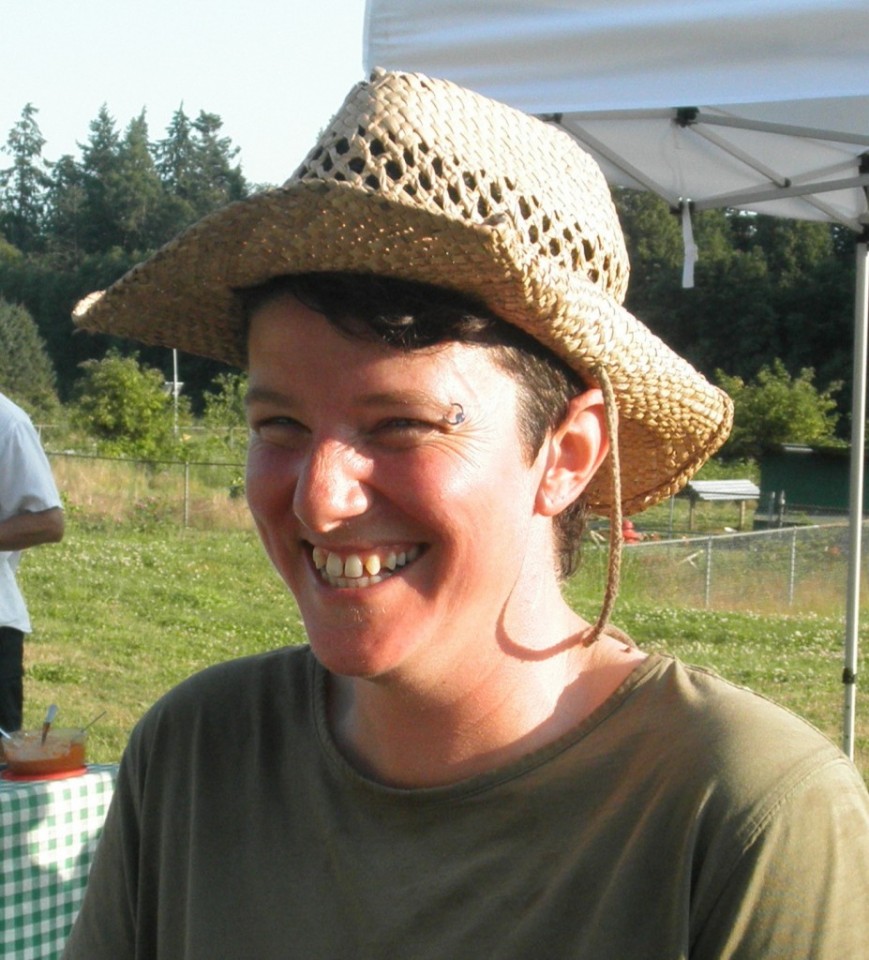
What is your position at the UBC Farm?
I am the perennial & biodiversity coordinator and the seed-hub coordinator.
How did you get involved with the UBC Farm? (When did you start working here?)
I arrived here five years ago so this is my sixth season starting. I was then a student in Land and Food Systems (LFS) in the soil science program. I started as a Work-Learn at the UBC Farm. I worked part-time until I graduated and after I graduated, I moved into full-time. Back then, the farm had a small team so there was a lot to be done. Now, we have many positions for volunteering, internships and Work Learn. So many opportunities for students to get involved.
What makes the UBC Farm different from other farms?
The community here is quite different. We attract a wide spread of people from students, researchers and community at large but on any other farm you would only have your small community popping by here and there. The fact that it’s a public farm makes it unique in terms of spread of people but also the spread of the tasks you may end up doing in the day. In terms of fields operations, three quarters of our work is probably is quite similar to what other farms do but then there is 25 per cent that you end up doing that you would never do on another farm, such as supporting the research and education programs that is constantly going on here.
What is your favourite/most important part of your job?
I think the uniqueness of this position is that I get to discover a love of teaching, which I didn’t know I had before. I always trained my staff but when I have genuine teaching opportunities, I really take pleasure to see people learning and see people absorbing and changing. That, I think, is my favourite part of my job, after the actual farming.
What does a typical day for you look at the UBC Farm?
In the summer, a typical day is very fast-paced. Plans tend to change on the spot so it is quite difficult know what the day will end up looking like. It’s really hard to explain day-to-day farming activities because it varies so much. For my team, I usually try to find 2-3 hours tasks, such as weeding or harvesting, and then move to another 2-3 hours task.
You also live as a caretaker at the farm, what’s it like to live here, at your place of work?
To live here is fantastic. I love it more than I was expecting. I think part of it is to be able to have both worlds. I love the countryside and I know ultimately, I will end up there. In the meantime, to live a partial countryside life while being in the city puts me at peace with my current job and lifestyle.. I think the best part is at the end of the day, when the gate locks and the construction outside is over, you can start hearing owls or birds flying around and just the quietness. This place is keeping me mentally happy.
What do you want people to know about the UBC Farm?
I want people to know how good our team is. The fact that we always work with each other and with the community around us. We’re not just a department where everybody has their cubicle or works in the corners. We eat together, we share. You really need to like people to work here.
There is also a good spread of age and interaction. We are surrounded with kids that bring us hope about the future, we have the elders that bring wisdom to the place and we have the working team showing us the importance of collaboration.
What internship position do you supervise?
This term, in the fall, I will supervise the Orchard and Seed production positions and in the summer, I will supervise the Field Intern position.
What kind of tasks did you assign?
For most of the summer, it was mostly seeding, weeding, building structures, transplanting and many other practical farming tasks. Moving into fall, there was a lot of seed production. With interns, I’m careful to offer a learning opportunity whenever there is a moment.
What do you look for when hiring an intern?
I’m looking for someone who is flexible and really wanting to learn. You can learn so much more if you are a learner-type. I want to see the fire in them, see fascination and have someone that has some initiative too.
What do you think the interns gain at the end of their internships?
I think a farm is a place of self-growth. You are learning about yourself but are also learning what you actually want to do. There are many opportunities for growing in ways you may not imagine. Some people come and realize they cannot do this and some are eager to take farming to next step and internships are great tools for that.
What message do you have for the next crop of interns?
Be bold! If you are curious about farming there is no other way of finding out than trying it out. You need to have the physical contact to know so be bold and try it out.
What’s your favourite thing that grows at the UBC Farm?
I have this love affair with tomatillos, just because they are so weird and I also love salsa. I have a connection with them that made me start saving seeds. So that’s why tomatillos are the first ones that comes to mind. It’s not that I eat a lot, it’s just a weird emotional connection.
LFS 496 Student Profile: Sophie Draper, Feeding Growth Assistant
Student Profile: Sophie Draper, Feeding Growth Assistant
*Disclaimer: The Career Development in Land and Food Systems course is the updated title of the previously-named Career Development in Land and Food Systems Internship.
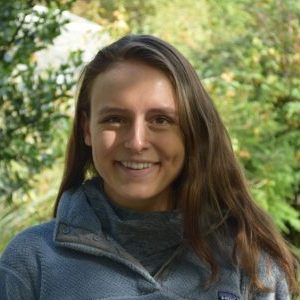
LFS 496 Feeding Growth Assistant
Supervisor: Véronik Campbell
What do you study and why does it matter to you?
I am in Global Resource Systems in the faculty of LFS as a 3rd year student. The reason I chose this program is because I am very passionate about sustainable agriculture and its movement in the food sector. The changing of our agricultural sector is going to be increasingly important – it is a revolution to come. Food has largely become commoditized and therefore it is not seen as powerful as it is anymore. Food has the potential to bring people together; it is language, culture and community. As we connect ourselves with food, we are healthier, we are happier and we are closer to people around us. But now, we’ve become very disconnected from our food. That disconnect has implications in all the society, in our personal lives, our relationships and our sense of well-being. I’m in this program and chose this internship particularly because I want people to look deeper to our relationship with food.
What was your work placement?
I worked with Véronik Campbell who is the Academic Program Manager at the Centre for Sustainable Food Systems at UBC Farm (CSFS). I worked on a program she helps run called Feeding Growth. Feeding Growth is a learning program for sustainable packaged food companies in Vancouver and BC where different entrepreneurs come together regardless the stage they are in. These sessions allow the entrepreneurs to collaborate to grow their business and learn more about different aspects of running a business that maybe that hadn’t had access to before. As an intern, I helped run the events, run our Instagram page and at the end, I got to do profiling of companies which led me to write business profiles of them. These profiles may possibly be put on the website or our social media channels like Facebook and Instagram. Throughout my internship, I got to have a good balance of both concrete tasks and being able to have room to implement my own ideas as well.
What intrigues you about the Food System?
Just how far-reaching food is in our lives. I am constantly drawn into how much food is applicable into our lives and how there is always more to learn. Farming, for example, is incredible given how connected people are to the land. In the past people had their one-family farms and it was a very close unit of sustainable farming. Their connection to the land was much greater in terms of weather, the earth, and surroundings. As they were coming across with unimaginable scenarios, they had to learn from their experiences which makes learning endless. So, that’s what fascinates me about the food system, just how interconnected we are with food or can be and how powerful than can be. We just have to make sure we hold on to that connection and don’t lose it as the food system starts to change.
What was the most interesting thing you learned from your work placement?
Before this internship, I didn’t know where I belonged in the food system. Business, particularly was an area I always distanced myself from. I thought of it as competitive, not about collaboration but more about profit and an individualistic. This internship was eye opening in terms of how business could be community based as well. At the sessions, we had several Kombucha companies. They were competitors but they were also working together in groups to help each other and to give each other feedback. That completely changed my perspective on how business can be community based and a collaborative effort even if you are competitors. It also taught me how I’m inspired by these community efforts. People generally want to make the world a better place and there is a lot of power that brings people to come together. And interestingly, this internship made me realize I am interested in business development and entrepreneurship. It’s a lot of work and requires risks to be taken but I think I’m someone who is willing to do that.
What was your biggest struggle during your work placement?
Feeding Growth is an event that includes multiple entrepreneurs who are almost experts about the food system in BC and I saw this as a great opportunity to learn more about it myself. I’m very passionate about the food sector but I also don’t know much. In order to be involved it their circle, I needed to trust myself to have conversations or to be involved overall. Thankfully, the people at the sessions were so open and friendly that they would come up to me thinking I had a company. Even though I was just an assistant, they would still be willing to engage in conversations. It was a learning experience of both the food sector and also realizing that it is okay to not know a lot – people will be willing to talk you if you are passionate about something. It was a struggle for me to enter their circle until I realized how much people are willing to share with and learn from each other.
What is your favorite plant/crop that grows at the UBC Farm?
Anise.