Generating a more holistic understanding of the risks of pandemics, with Dr. Ivette Perfecto
By Jacqueline Chan on March 3, 2021
Generating a more holistic understanding of the risks of pandemics
Keynote Webinar with Dr. Ivette Perfecto
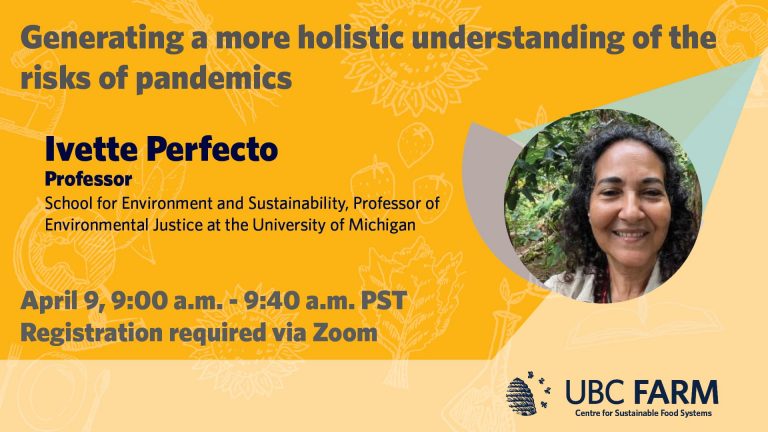
On Friday, April 9th from 9:00 a.m. to 9:40 a.m. PST, join Dr. Ivette Perfecto as she discusses the importance of integrating ecological, social, and political factors for generating a more holistic understanding of the risks of pandemics.
This will be framed in the context of the Pandemic Research for the People, a working group of the Agroecology and Rural Economics Research Corps. This working group consists of academics, farmers, activists, who collectively take action to develop a critical analysis as well as agroecological alternatives to achieve healthy landscapes for the environment and for the people.
This webinar is free with registration. Can’t attend the event live? Not a problem! This session will be recorded – register to receive the recording link.
Hosted by Diversified Agroecosystem Research Cluster and the Centre for Sustainable Food Systems
The Diversified Agroecosystem Research Cluster is developing novel approaches to assess linked social and ecological outcomes of diversified agroecosystems. Uniquely positioned as a research excellence cluster based at the University of British Columbia’s Centre for Sustainable Food Systems, cluster team members use ecological, social, economic and systems analysis perspectives to improve soil and water quality, minimize nutrient losses, protect biodiversity, and support climate resilience and food sovereignty.
If you have any questions or concerns regarding registration, please contact Jessica Latus.
Read More | No Comments
By Jacqueline Chan on March 1, 2021
Diversified Agroecosystems Cluster is renewed
The Diversified Agroecosystems Cluster has been renewed for the next 2 years. This is a major UBC grant hosted at the CSFS and is a collaboration with researchers across North America.
More about the Cluster
Over the last three years, the UBC
Research Excellence Cluster on Diversified Agroecosystems, convened by
the Centre for Sustainable Food Systems at UBC Farm, has built a global network of researchers and
farming organizations that are documenting, synthesizing, translating and transforming practices for
sustainable and resilient food systems. We have developed, tested and continue to generate novel
methods to foster agroecological transitions in global agriculture across diverse cultures, geographies, and
economies. We have integrated diverse ways of knowing to stimulate evidence-based decision-making at
scales from households to global policy networks.
We have piloted an innovative farm-scale digital
platform (LiteFarm) that benefits farmers while catalyzing socio-ecological research innovation. We will use
the next 2 years to launch this platform globally while also pursuing an exciting research framework to
envision and implement a 100-year research experiment at UBC Farm. These key capstone deliverables for
the Cluster will ensure that the synergistic research that the GCRC galvanized will persist and evolve with
the UBC Farm serving as a global leader for diversified agriculture for decades to come.

Read More | No Comments
By Jacqueline Chan on February 26, 2021
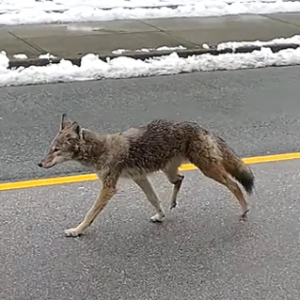
Meet Kip, the three-legged coyote living at UBC
News Source: CTV, Vancouver is Awesome
February 24, 2021
“No, the tri-yote doesn’t need help.” – Brendan Kergin
News outlets featured a coyote spotted on UBC’s Vancouver campus and spoke with Dr. Kristen Walker, CSFS Associate and professor in UBC’s Faculty of Land and Food Systems.
Read More | No Comments
By Jacqueline Chan on February 26, 2021
Meet a young agrologist helping organic farmers with their green production goals
News Source: The Star
January 13, 2021
“We all learned how to recycle because of school campaigns. We then took that information home. We have a large school population, and food security education can help shape those minds.” – Amy Norgaard
The Star featured Amy Norgaard, an agrologist who works at CSFS Associate Dr. Sean Smukler’s lab (the Sustainable Agricultural Landscapes Lab at UBC). She talks about her work in teaching about sustainable soil management and assessing greenhouse gas emissions from agriculture.
Read More | No Comments
By Jacqueline Chan on February 25, 2021
Increased COVID-19 variant severity not enough evidence for B.C. authorities
News Source: Vancouver Sun, The Province
February 24, 2021
“Epidemiologists prefer studies of tens of thousands of cases and months of observation.” – Dr. Leonard Foster
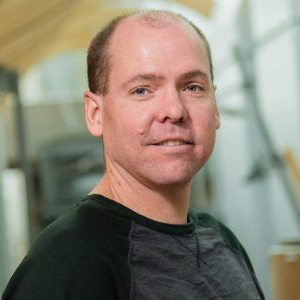
Dr. Leonard Foster, CSFS Associate and head of UBC’s department of biochemistry and molecular biology, says that while there hasn’t been enough time to build strong data on variants, it can still be useful to be aware of the hints contained in early research.
Read More | No Comments
By Jacqueline Chan on February 23, 2021
Biodiversity Research Photo Competition Results
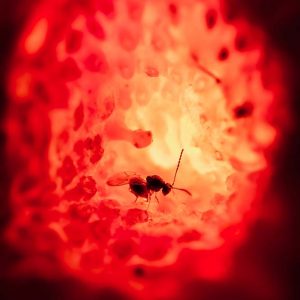
Warren Wong, a PhD student in Dr. Juli Carrillo’s lab and CSFS student member, won the BRC Photo Competition’s Community Choice Award. His photograph is of a parasitoid (spotted wing drosophila) inside a raspberry.
The image is shown to the left of this text, as well as in this link for better resolution. Congratulations, Warren!
Read More | No Comments
By Jacqueline Chan on February 22, 2021
Delta seeing decline in soil organic matter
News Source: Delta Optimist
February 21, 2021
“Critical to soil health, the organic matter is on the decline in Delta and throughout the Fraser Valley.” – Dr. Sean Smukler
Delta Optimist reported on a study which shows that organic matter is on the decline in Delta and throughout the Fraser Valley. Organic matter is made up of decomposed plant and animal tissues, and is very important for soil aeration and water holding capacity. Dr. Siddhartho Paul conducted this study while he was a graduate student in CSFS Associate Dr. Sean Smukler’s lab (the Sustainable Agricultural Landscapes Lab at UBC).
Read More | No Comments
By Jacqueline Chan on February 18, 2021
How regenerative agriculture is putting hope in the soil
News Source: The Star, Yahoo
February 18, 2021
“This reality is something all Canadians should be concerned about, as soil is integral to our ecosystem and the source of our food.” – Gabrielle Bastien
Dr. Sean Smukler, CSFS Associate and a professor at UBC’s Faculty of Land and Food Systems, gave comments about the impact of regenerative agriculture on agricultural production and the mitigation of climate change.
Check out the original article at The Star or Yahoo.
Read More | No Comments
By Jacqueline Chan on February 18, 2021
(Portuguese) International Cooperation Project – Projeto De Cooperação Internacional
News Source: Cepagro
January 22, 2021
“A aceleração da crise climática global ameaça cada vez mais a segurança alimentar e nutricional das populações do campo e da cidade” (Translation: The acceleration of the global climate crisis is increasingly threatening the food and nutritional security of rural and urban populations) – Cepagro
Please see the left sidebar in the article for translation into English.
The “Agroecology in Latin America: building paths” project had been created through international collaboration between Cepagro and UBC via Dr. Hannah Wittman, CSFS Associate and professor at the IRES (Institute for Resources, Environment and Sustainability). The project’s data collection is conducted by LiteFarm, a digital agricultural management tool developed by UBC’s scientists, designers, and students.
Read More | No Comments
By Jacqueline Chan on February 4, 2021
Protecting Biodiversity – Farmers and Agriculture
News Source: The Conversation
February 3, 2021
“Given population pressure, it is not politically feasible to increase the extent of protected areas. The question is, how will Africa provide space for its wildlife and food production?” – Dr. Terry Sunderland
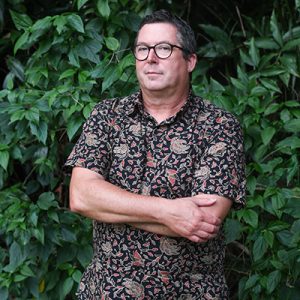
Dr. Terry Sunderland, CSFS Associate and professor in the Faculty of Forestry, co-authored an article on why resource conservation strategies should not only focus on protected areas, but also make use of the chance to maintain biodiversity within agricultural landscapes.
Read More | No Comments