So-called ‘safe’ pesticides have surprising ill effects

So-called ‘safe’ pesticides have surprising ill effects

So-called ‘safe’ pesticides have surprising ill effects

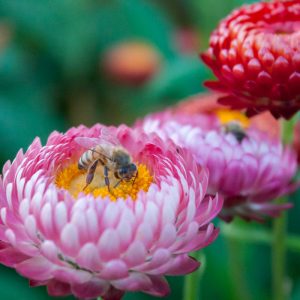
Bee pollinating a pink flower

March 8, 2023

CSFS Associates Risa Sargent, Juli Carrillo and Claire Kremen highlighted data pointing to the impact of pesticides on bees and on fishing around Japan.

They looked at three cases of “safe” pesticides that adversely affected other organisms in the ecosystem.

Read the full article at UBC News.

We can’t stop climate change by hating each other

We can’t stop climate change by hating each other

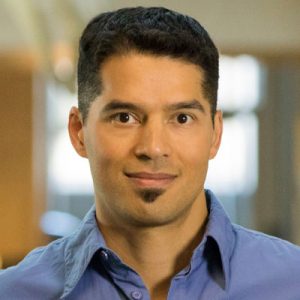
Headshot of Emily Huddart Kennedy

February 23, 2023

Sociology associate professor and CSFS Associate Dr. Emily Huddart Kennedy discussed her research about how stereotypes are affecting how people tackle climate change.

Climate change “requires coordination and compromise – the sorts of qualities that emerge from relationships of trust and mutual respect. It is not an effective use of our minds and hearts to make moral judgments of one another’s relationships to the environment.”

Read the full article at the Academic Minute.

LiteFarm: Discover the farm management application focused on sustainable agriculture

LiteFarm: Discover the farm management application focused on sustainable agriculture

A person training a producer on how to use the LiteFarm app

Photo: Cepagro

February 23, 2023

Developed at the CSFS, in collaboration with farmers and cluster members, LiteFarm is a free and open source web application aimed at managing diversified agricultural systems.

Since 2020, the platform has also been used by the Cepagro team and seven other organizations that promote Agroecology in Brazil, Paraguay, Ecuador, El Salvador and Mexico.

Read the full article at Cepagro.

Surrey salmon hatchery rebuilding after 2021 flooding

Surrey salmon hatchery rebuilding after 2021 flooding

River at UBC's Malcolm Knapp Research forest

February 15, 2023

CSFS Associate Tara Ivanochko, Professor of Teaching in Earth, Ocean and Atmospheric Sciences was interviewed about salmon hatcheries.

“They’re a Band-Aid sort of targeted intervention when a stock is really depleted,” said Ivanochko. “But they shouldn’t be seen as the way that we proceed in the long term where we’re providing these hatched fish that will then go in and intermingle with the wild stocks.”

Read the full article at City News (Vancouver).

Food fight: The struggle for agricultural reform and food sovereignty

Food fight: The struggle for agricultural reform and food sovereignty

Illustration of a person watering a lush tower of plants

Illustration by DAQ, via UBC Magazine

February 15, 2023

The University of British Columbia magazine interviewed CSFS Associate Dr. Hannah Wittman on her research on food sovereignty, CSFS and UBC Farm research, and her roots in farming.

“We’re trying to take an integrated approach so that students are trained holistically in what it takes to support a sustainable food system. It’s not just about the latest technology, it’s not just about the way to grow food, it’s not just about a more efficient distribution system – you have to take all of those things together, and you have to teach it to the next generation.” says Wittman.

Read the full article at UBC Magazine.

Work Learn Profile: Emi Durfeld, Perennials and Seed Crop Worker

Work Learn Profile: Emi Durfeld, Perennials and Seed Crop Worker


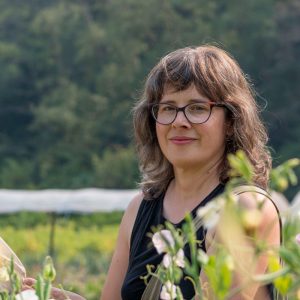
Emi Durfeld

What did you work on in this role?

In this role, I have been lucky to have had a flavorful taste of different tasks throughout the seasons. In the fall, I spent time harvesting perennial herbs for Saturday markets, helping out with farm harvests and harvesting seed from crops. As well, throughout the fall I harvested many apple varieties. In late fall and early winter, I transitioned more of my work to processing harvested seed, which consisted of threshing, winnowing and sieving to clean the seed thoroughly.

What did you learn in this position?

In this position, I have learned how to work creatively with available tools to complete a necessary step in processing seed. I have developed a seasonal way of thinking about seed crops and the factors at play throughout different stages of the plants life that can influence their viability and optimality. I have also learnt the vastness of working with seed crops and how their development, ripening, shape, weight and texture of seeds can impact the way they are collected and cleaned.

Why does this work matter?

This work is important because it is contributing to the self-sustainability of the UBC Farm by saving seed that has been grown on site so that it can be replanted next season. As well, this work contributes to the distribution of locally and organically-grown seed to the public in ways that they can engage with the UBC Farm, where their future plants came from.

What would you tell a new student taking on this role? Or what do you wish you had known?

It is okay not to have immediate answers on how to complete a certain task most efficiently. The UBC Farm is a place of learning always and it is okay to feel fresh and inexperienced in a certain type of work.

What should people know about the UBC Farm that they probably don’t know?

It is a space where team work is valued beautifully. Everyone that works on the farm is in constant communication with each other and always ready to drop their tools to go and help a fellow farmer with another task.

What’s your favourite thing to do at the UBC Farm?

Scavenge the fields, greenhouses and hedgerows for rogue veg, cool beans or over-ripened black berries. Also, taste testing apple crops to make sure they are ready to harvest!

What other roles have you held at CSFS at the UBC Farm?

As a student in the Faculty of Land and Food Systems, I have had several classes that have made visits to the farm as well as labs that have been hosted at the farm. In the past, I have also helped plant and harvest crops at the xʷc̓ic̓əsəm Garden, a beautiful and welcoming space.

Work Learn Profile: Kate Dunne, Saturday Farmers’ Market Worker

Work Learn Profile: Kate Dunne, Saturday Farmers’ Market Worker


Kate Dunne

What did you work on in this role?

I was a Saturday Farmers’ Market Worker! During the fall and summer, I worked with the sales team on Wednesdays to restock produce at the bookstore stand, the Field team to harvest veggies on Fridays, and helped facilitate the multivendor market on Saturdays. Some of my duties on Saturday involved setting up tents and tables, running the info booth, and doing a sign run into Westbrook. In the off season, I analyzed data from the previous year’s markets and compiled it into charts and infographics.

What did you learn in this position?

Through this position I learned so much! During the weeks, I had the opportunity to work with the staff that keep different facets of the farm running. On Wednesdays, I gained a broad understanding of the many varieties of produce we offered in addition to marketing and communication skills. Fridays allowed me to interact with the field team and observe how to efficiently operate a working farm. Saturdays taught me interpersonal skills as I fostered connections with vendors to better understand their positions in the food system. Lifting tents, tables, and crates of veggies every week I also became physically much stronger.

Why does this work matter?

Saturday Market Workers serve as the link between the public, vendors, and farm staff. We work closely with all three, making connections and learning about the struggles each group faces. This allows the UBC farm to operate as a strong community, supporting new vendors by sharing knowledge, and improving sustainable small scale food systems for everyone.

What would you tell a new student taking on this role? Or what do you wish you had known?

Don’t be afraid to try new things and meet new people! Everyone on the farm is super knowledgeable and friendly. The best way to learn things is to chat with one of our amazing farm staff or practicum students! If there’s something you wanted to try or learn, just ask, even if it doesn’t relate to your position.

What should people know about the UBC Farm that they probably don’t know?

How much goes on in such a small space! Not only are we a working farm with market, wholesale, and CSA programs, but there are also many research, educational, and community programs operating out of the unceded xʷməθkʷəy̓əm territory the farm occupies. The practicum program, children’s program, and Mayan garden are only a few of many!

What’s your favourite thing to do at the UBC Farm?

My favourite thing to do is participate in the Friday harvests! I love getting my hands dirty and helping the field staff harvest the produce of the week. While harvesting it is always great to chat(and laugh) with the staff and practicum students. Rain or shine, its amazing to come home at the end of the day feeling tired after a good days work. If you’re lucky, you might even get to start the morning with a team stretch led by field leads!

What other roles have you held at CSFS at the UBC Farm?

This was my first time helping out at the farm, but I will be sure to be back again!

How Canadians are getting creative to cut costs at grocery stores

How Canadians are getting creative to cut costs at grocery stores

Art Bomke gardening

February 10, 2023

Land and Food Systems professor emeritus and key supporter of the UBC Farm, Dr. Art Bomke, was interviewed about the Yard Garden Harvest project.

The project turns residential yards into vegetable gardens, and is playing a role as a community food security program.

Watch the clip in CBC’s Our Vancouver (37:11 mark).

English Dispatch

The English Dispatch of The Centre for Sustainable Food Systems at UBC Farm

Alex Pomeroy first came to the UBC Farm as a practicum student in 2019, joining the field team in January 2020 as a field coordinator managing alliums, potatoes, cucurbits and legumes and spent one year with the chickens. He just left the Farm and Canada for London, where his partner is pursuing her Master’s in Music Psychology. In these dispatches, Alex is sharing his impressions on the agricultural landscape in the UK, as he moves from field work to pursuing policy and community work in food.
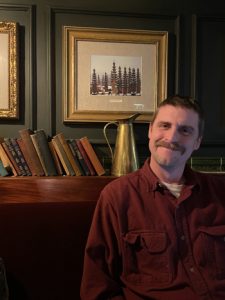
Alex Pomeroy at an English pub.

Alex Pomeroy at an English pub.

Two Days in Oxford

January 2023

As it happens, the novelties have not entirely worn off. I presently sit inside Oxford Town Hall for the opening of the Oxford Real Farming Conference. Oxford, England – home to the oldest English speaking university in the world. Yesterday my partner Shelby and I took a “coach” two hours up the “motorway” from London – granted about 45 minutes of that was simply getting out of the city. We had initially planned for a shorter, more scenic ride on the train, but the RMT (Union of Rail, Maritime and Transport Workers) were on strike, one of a number of short periods of industrial action since the middle of December. The response from current Tory PM Rishi Sunak has ranged from attempts to undermine the power of the strikes, permitting employers to bring in scab workers, and most recently, proposing anti-strike legislation which would allow public agencies to sue unions and fire employees who refuse to work – a move deemed likely illegal by the general secretary of the RMT, Mick Lynch. Workers from multiple public services including postal workers, nurses and border control have been taking similar action, demanding fair compensation and improved working conditions. I stand in solidarity with public sector workers in the UK, as I begin to navigate the social and political contexts of my new home. I believe this period of unrest critically shines a light on the experiences of migrant farm-workers in Europe, facing exploitative “contract-in-origin” policies, tying them to a specific farm (not too dissimilar to Canada’s TFW program, allowing workers to change employers but requiring them to reapply for a work permit). Even worse, undocumented workers experience horrible working conditions and pay, all while living in constant fear of deportation.

Wolvercote Common, Oxford. Grazing has been recorded here since at least 1086 – with many disputes regarding commoners’ rights over the centuries.

Anyways, back to the conference. I admittedly wake up in our hotel room with a bit of a headache, as we took in what the city had to offer last night, checking out some very old pubs and sampling local flavors. There was an incredible array of speakers (including Vandana Shiva) on topics ranging from gene editing (“GM’s with good PR” – Liz O’Neill / Director of GM Freeze), land struggles and agri-reform, the state of food policy in the UK, mass incarceration and prison abolition, and the plight of migrant workers in Europe. Speakers from a group called Cradle Community and the Landworkers Alliance spoke on those last two topics and I felt particularly fired up upon leaving the sessions. I was shocked to learn that there is a genetic technology bill currently going through Parliament, which if passed, would deem an organism not GM (including animals) if a gene edit made in a lab “could” have occurred in nature. Gene editing claims to be more targeted and precise, but as Liz O’Neill reminded us, it is crucial to recognize that precision does not equate to accuracy. One of the main takeaways from this panel including Dr. Shiva, was that contrary to the claims made by big agribusiness, we do have an abundance of food. The problem is with unequal access, and the fact that so much of what is produced is commodified for animal feed and biofuel (eg. soy and corn). One proposal put forth by The Land Magazine in their 2023 manifesto, to address the high costs and difficulties of obtaining organic certification, would put the burden of labeling on “farmers who employ chemicals or other ecologically suspect practices” rather than on small-scale organic growers. While this does not seem likely or feasible, it sure is a nice thought. I met some fascinating folks and the experience has begun to help me narrow down the type of work I want to find here in the UK, as well as fields of postgraduate studies I wish to pursue. Lastly, I want to thank Dakota Varen for recommending that I check out this conference!

Cheers,

Alex Pomeroy

Only one-in-five hungry Canadians use food banks — what’s broken?

Only one-in-five hungry Canadians use food banks — what’s broken?

produce laid out for sale at the UBC Farm market

January 16, 2023

CSFS Associate and Land and Food Systems professor Dr. Jennifer Black explained why people avoid food banks.

“Most people will do almost anything to not have to go. They’ll borrow money from friends. They’ll sacrifice things. They’ll sell things. They’ll go into debt,” said Black.

Read the full article by Glacier Media via Vancouver is Awesome, Castanet, Pique Newsmagazine and Dawson Creek Mirror.