Market Recipe Blog: Tempeh Bacon Caesar Salad
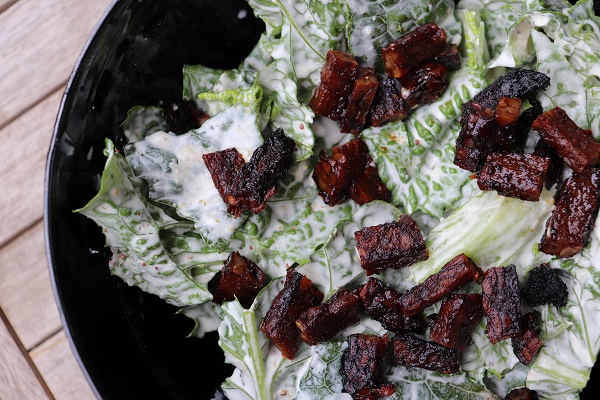
Nothing says summer like a big crispy head of romaine lettuce in a creamy caesar salad! Katie Neufeld, who CSA members may remember from 2015 when she ran the CSA pick-ups, shared this caesar salad recipe and it turned into a favourite for us. We also love the flavour of this tempeh bacon, both delicious and crispy. Pick up some romaine from our market, tempeh from our Saturday Farmers’ Market vendor Tempea Natural Foods, and a firm aged cheese like Gillandsbeck from vendor Haltwhistle Cheese Company.
Tempeh Bacon Caesar Salad
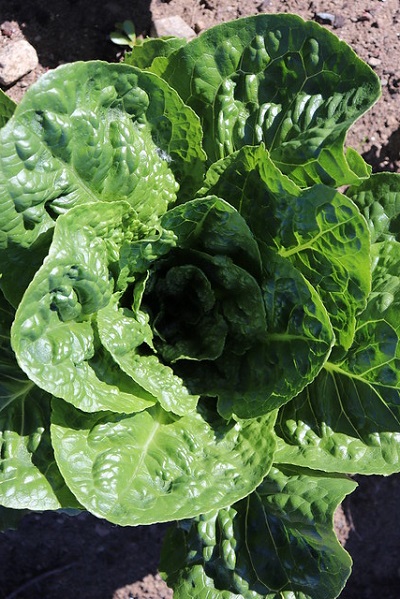
Salad ingredients
- 2 garlic cloves, crushed or minced
- 1 teaspoon worchestershire sauce (can buy gluten-free)
- 1 teaspoon dijon mustard
- 2.5 tablespoons lemon juice
- 1 cup mayonnaise
- salt and pepper to taste
- 0.5 cup shredded cheese
- 2 large heads of romaine lettuce
Tempeh bacon ingredients
Instructions
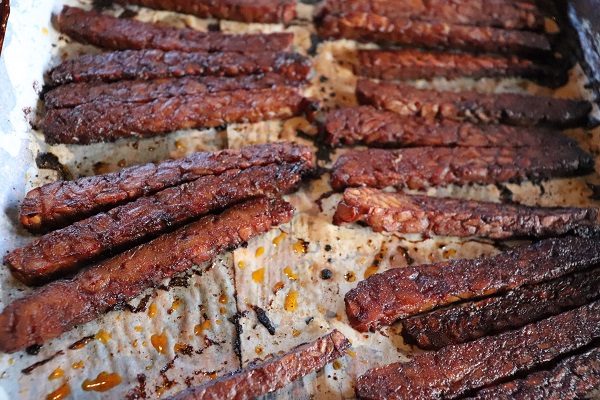
- Whisk together tempeh bacon ingredients in a shallow dish, then add tempeh and gently toss to coat. Cover and chill for 2-4 hours if possible, but still tastes great cooked right away!
- Lay tempeh out on a baking sheet lined with parchment paper that has a rim (so nothing drips off). Drizzle with remaining marinade.
- Bake tempeh at 400F and toss after 10 minutes to evenly coat. Cook for 30-35 minutes, until dark and crispy. Chop into small pieces.
- Mix together salad dressing ingredients (shaking in a mason jar works well) and toss with chopped lettuce (leaves, stems and all) and chopped tempeh. Enjoy!
Pick up produce at any of our three weekly markets: Tuesdays 4-6:30PM at the UBC Farm, Wednesdays 11:30AM-1:30PM at the UBC Bookstore, and Saturdays 10AM-2PM at UBC Farm. Learn more about our produce and browse other recipes in our Market Recipe Blog. Recieve regular market recipes from our newsletter here.
Understanding Soil Organic Matter’s Relationship with Agricultural Productivity
Cluster Hire in LFS Applied Biology, Sustainable Agriculture and the Environment, and CSFS at UBC Farm
Research Seminar: Soil Organic Matter Formation and Function: Understanding Soil Organic Matter’s Relationship with Agricultural Productivity
Dr. Emily Oldfield
Research Science Advisor
Forestry and Environmental Studies
Yale University
Click here to fill out the Feedback Form for Dr. Emily Oldfield
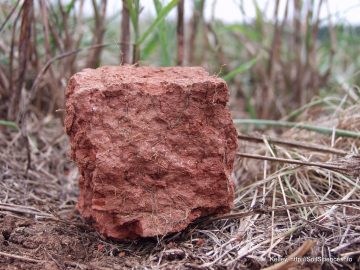
From sustaining crop production to enhancing water quality to mitigating climate change, soil organic matter (SOM) provides a multitude of ecosystem services. Yet despite the general consensus of the benefits derived from SOM, research remains inconclusive regarding the enhanced functional benefits derived from additions of SOM. Furthermore, scientific understanding of the mechanisms behind SOM formation and stabilization is currently undergoing a paradigm shift, with significant implications for predicting what will happen to both agricultural yields and soil carbon stocks under climate change. To better understand the mechanisms behind SOM’s contribution to ecosystem services such as carbon sequestration and productivity, my research explores SOM as both a driving variable and an outcome variable. By conducting research on working farms throughout British Columbia, including the UBC Farm, I plan to delve further into consequential relationships between SOM, agricultural management, and ecosystem outcomes.
When and Where?
- June 27, 2019 from 11:00 a.m. to 12:30 p.m.
- MacMillan Building, Room 160
About the Presenter
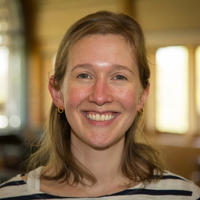
Dr. Emily Oldfield, Yale University
Dr. Emily Oldfield is a soil ecologist exploring how we can feed a growing population in ways that minimize harm on the environment. Her research focuses on soil ecological processes related to soil organic matter (SOM) and nutrient cycling. She asks mechanistic questions related to processes of SOM formation occurring at the microbial scale as well as applied management questions occurring at the landscape and global scale. She explores these basic and applied questions through extensive analysis of the literature, laboratory investigations, and field and greenhouse experimentation. Her research aims to engage stakeholders in ways that advance ecological understanding while also having direct implications for management. While at Yale, she has been actively involved in engaging students in hands-on experiential learning on the Yale Farm.
This seminar is part of the LFS Applied Biology Faculty Cluster Hire in Sustainable Agriculture and the Environment. Ten short-listed candidates will be giving seminars in May and June as part of their intensive interview process. Click here see a full list of events.
Saturday Farmers’ Market Vendor Feature: Tayybeh Syrian
Saturday Farmers’ Market Vendor Feature: Tayybeh Syrian
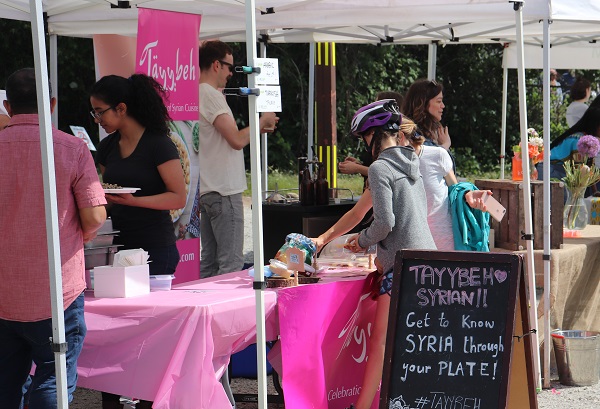
Tayybeh Syrian is a food company and social enterprise that supports Syrian women chefs in Vancouver by offering award-winning home-style food through catering, a food truck, regular community pop-up dinners and packaged products. Tayybeh is not only a celebration of the brilliance of Syrian cuisine, it is a way for spectacular female Syrian chefs to support their families and become financially independent while doing what they love.
We were able to chat with one of the lovely Tayybeh employees, Miriam, as the first summer market. She has been working with this social enterprise for over a year, while her mom has been working with Tayybeh since their first month in Canada, back in 2016. Miriam works as a sales representative at farmers’ markets, the food truck, and supports various services and events. Below, you will find all the questions she was able to answer for me while at market:
Tayybeh (tie-bey), what does that mean?
It means “kind” in Arabic and “delicious” in Syrian dialect.
What can be purchased at market?
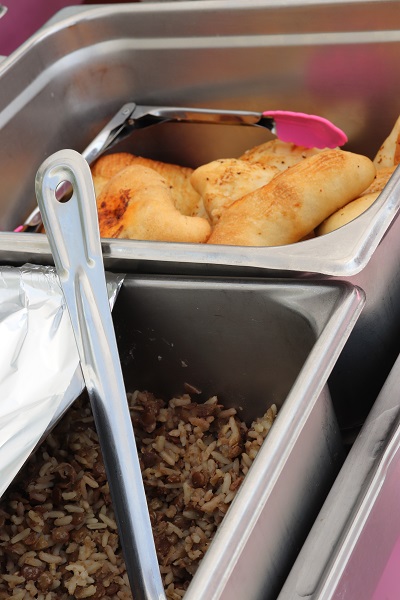
Our packaged dips are one thing that can always be found with us at market. We also have some hot meals, ready for customers to enjoy for lunch. Today, we have a rice and lentil meal, covered with caramelized onions, with a side of humus and salad. Another option today is the vegan pockets. One with olives and sweet red pepper, the other has spinach with pomegranate molasses, also with sides of salad and hummus. Similar meals can be purchased at our Robson food truck.
What types of dips do you have?
Mhammara (sweet red pepper dip): it comes with crushed walnuts, pomegranate molasses, little bit of cumin, olive oil, with some of my Mom’s secret ingredients. Mutabbal (smoked eggplant dip): a great mix of smoky and creamy, with lemon juice, garlic and tahini.
What would you like customers to know about Tayybeh?
I would love them to know that all of Tayybeh’s staff are working from their heart, the chefs are cooking with love, and we do this job to let them know Syria through the food. This is an opportunity to share Syrian culture within the Canadian culture. We are always aiming to do better through supporting our customers, who are so supportive and friendly and we love having the opportunity to share our food with you.
Where can customers find you other than the UBC Farmers’ Market?
We have our food truck on Robson square, every Tuesday and Wednesday. Customers are also able to find us in some stores, such as Nada Grocery and if you check our website you are able to find all the retail locations that we sell in.
Tayybeh can be found at the UBC Farm Saturday Farmers’ Market every second week on all of the following dates: June 08, Jun 22, July 06, July 20, Aug 03, Aug 17, Aug 31, Sept 14, and Sept 28. For more information on Tayybeh, and photos of their delicious food see the following links: Website | Facebook | Instagram.
Market Recipe Blog: Mustard Greens Spring Quiche
Market Recipe Blog: Mustard Greens Spring Quiche
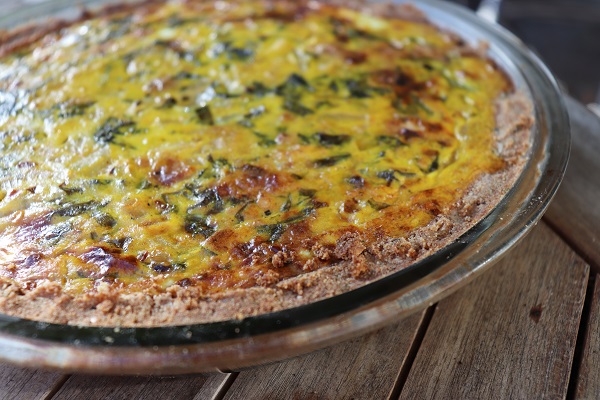
Mustard greens are some of the first fresh greens available at our markets in the spring and have a spicy kick that we love mixed into a fresh salad with lettuce or lightly wilted into sautéed dishes. This quiche is a great chance to pair these flavourful greens with eggs from our pastured hens and a bold cheese from Saturday Farmers’ Market vendor Haltwhistle Cheese Company. Not a fan of the mustard flavour? Try substituting the greens for other spring veggies like asparagus, arugula, or spinach!
Mustard Greens Spring Quiche
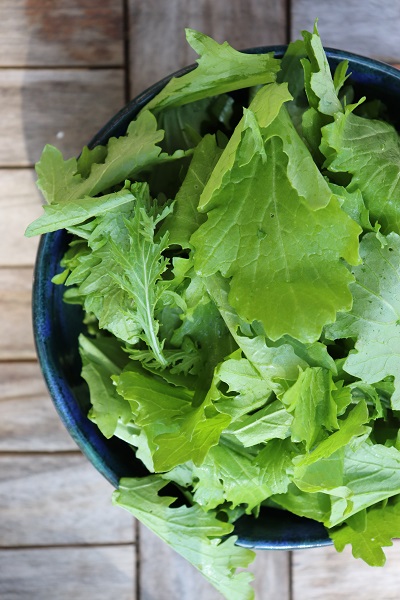
Recipe (adapted from Dishing up the Dirt)
- 2 cups almond flour
- 6 cloves of garlic, minced
- 1 Tablespoon minced fresh thyme or 1 teaspoon dried thyme
- 1.5 teaspoons salt
- ground black pepper
- pinch of crushed red pepper flakes
- 1/3 cup + 1 tablespoon olive oil
- Water as needed
- 1 small onion, minced (about 1/2 cup)
- 1 bunch of mustard greens, roughly chopped (about 2 cups)
- 1/4 cup dry white wine or 1/8 cup white wine vinegar
- 1/2 cup whole dairy or non-dairy milk
- 4 eggs
- 1/2 cup grated or cubed strong cheese, like Tomme de Vallée
- generous pinch of ground nutmeg
Instructions
- Place a rack in the center of the oven. Preheat the oven to 400F. Grease a 9 inch tart pan or pie plate with oil. In a large bowl whisk together the almond flour, half the garlic, thyme, 1/2 tsp salt, a pink of pepper and crushed red pepper flakes. Stir in 1/3 cup of oil and mix until well combined; add a bit of water if too dry. Press the dough into your greased tart pan or pie plate making sure the dough goes at least 1 1/4 inches up the sides. Bake until the crust is lightly golden and firm to the touch. About 15 minutes.
- In a large cast iron skillet heat 1 tbsp oil over medium heat. Add the onions and remaining garlic and cook, stirring often until they begin to soften up and become fragrant, about 5 minutes. Add the mustard greens and cook, stirring often until they begin to wilt a bit. Add the wine/vinegar and continue to cook until the moisture evaporates. Remove the veggies from the heat and set aside.
- In a large bowl whisk together the milk, eggs, cheese, nutmeg, and remaining salt and pepper. Add the cooked veggies and stir well. Pour the egg/veggie mixture into the pre-baked crust and place back in the oven and bake until the crust is a deep golden brown and the center is set. About 30-35 minutes. If the crust begins to brown too quickly place tin foil around the edges to prevent it from burning.
- Let the crust cool for about 5 minutes before slicing and serving
Pick up produce at any of our three weekly markets: Tuesdays 4-6:30PM at the UBC Farm, Wednesdays 11:30AM-1:30PM at the UBC Bookstore, and Saturdays 10AM-2PM at UBC Farm. Learn more about our produce and browse other recipes in our Market Recipe Blog. Recieve regular market recipes from our newsletter here.
ReachOut Feature: Thinking Small in the Face of Climate Change
ReachOut Feature: Thinking Small in the Face of Climate Change
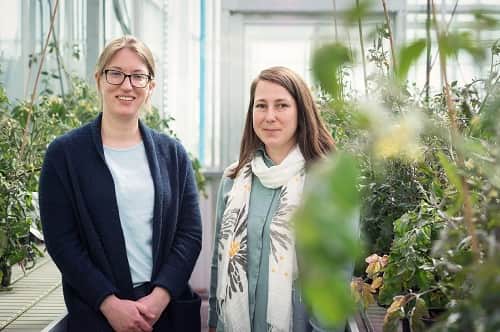
CSFS researchers Dr. Juli Carrillo and Dr. Cara Haney were featured in the latest issue of the Land and Food Systems Faculty Journal, ReachOut, for their two-year research project investigating how beneficial soil microbes can help plants deal with the global rise in carbon dioxide.
Carrillo and Haney’s project is funded by George Weston Seeding Food Innovation Grant. Using a beneficial soil microbe, Pseudomonas fluorescens, Carillo and Haney are teasing apart genetic traits that can help in addressing the effects of carbon dioxide on plant health. The researchers are hopeful that they will be able to uncover microbial solutions that can be used in both organic and conventional farming.
Read the full article here.
ReachOut Feature: Better Veggies for Canadian Organic Farmers
ReachOut Feature: Better Veggies for Canadian Organic Farmers
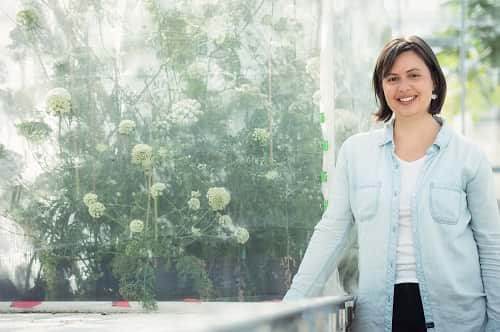
CSFS researchers Dr. Alexandra Lyon and Dr. Hannah Wittman were featured in the latest issue of the Land and Food Systems Faculty Journal, ReachOut, for their latest Canada-wide research venture, the Canadian Organic Vegetable Improvement (CANOVI) project.
The CANOVI project aims to help organic vegetable growers find plant varieties better suited to Canadian climates and environments. The project focuses primarily on participatory plant breeding of peppers and carrots – two crops identified as top priorities for organic vegetable growers in a survey the CANOVI team conducted last year.
Funding for the five-year research project comes from the Organic Science Cluster 3, supported by Agriculture and Agri-Food Canada’s Canadian Agricultural Partnership. The Bauta Family Initiative on Canadian Seed Security, a national group, has joined the project as an industry partner. Lyon and CANOVI’s collaborators are in the early stages of research, but are hopeful that their findings will improve things for Canadian organic farmers – “one carrot and pepper at a time.”
Read the full article here.
ReachOut Feature: Learning Tools for Just Food
ReachOut Feature: Learning Tools for Just Food
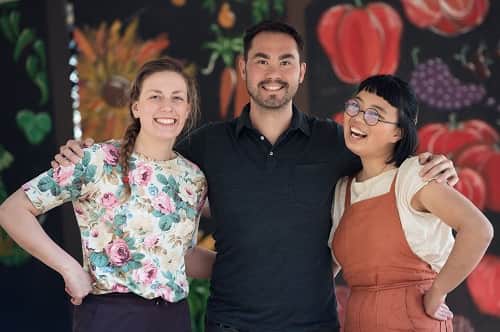
Joyce Liao and Meryn Corkery, fourth-year students in the Faculty of Global Resource Systems and former and current WorkLearns (respectively) with the CSFS at UBC Farm, were featured in the latest issue of the Land and Food Systems Faculty Journal ReachOut. The feature highlights their two-year research project, “Just Food: Building Equity Competencies with Food Systems Pedagogy.”
According to Liao and Corkery, the concept of intersectionality is a critical lens for understanding the different ways people shape and are shaped by the food system. Their research explores strategies to better integrate the concept of equity in the food system into the undergraduate curriculum for Land and Food Systems.
Liao and Corkery’s two-year project is supported by PhD candidate Colin Dring, and involves people from across UBC campus, including members from the Centre for Sustainable Food Systems at UBC Farm; Faculty of Arts; Department of Educational Studies; and the Centre for Teaching, Learning Technology. The project is funded by UBC’s Teaching and Learning Enhancement Fund. In the end, the project team hopes to build a collection of online multimedia and open source materials available to those within and external to UBC, as well as teach-back tools that could be used by both students and faculty members.
Read the full article here.
Food Roundtable: Knowledge from Agroecological Experience
Food Roundtable: Knowledge from Agroecological Experience
Peter Wall Institute
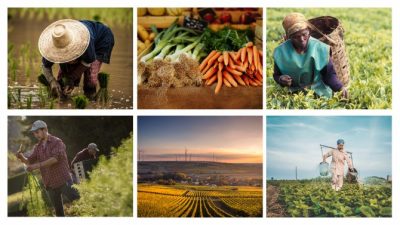
As Agroecology – in its multiple dimensions – has received considerable attention in the last five years on global and regional levels, multiple requests have been made on the part of governments for a better evidence base on the performance of Agroecology vis a vis other “sustainable agriculture” systems. There is an increasing recognition that we leave off a vast scope of knowledge by ignoring or not validating diverse sources of information: the knowledge and experience of farmers, local communities, and many community-level initiatives with a depth of knowledge far beyond the bounds of experimental stations and controlled environments.
In the context of providing a rapid review of such realms of knowledge to support the ongoing Committee on World Food Security High Level Panel of Experts project report on Agroecology, we explored methods to facilitate better capturing of local experiences and impacts that ultimately reflect larger patterns, seeking to expand observations and inferences from individual case studies beyond their spatial and temporal boundaries.
A photo exhibit on agrobiodiversity and food security called “Nature and Nourishment: The Agrobiodiversity and Food Security Nexus” will also be on display.
When, Where, and How Much?
- May 30 2019 from 4 pm until 6 pm
- Liu Institute, xʷθəθiqətəm (Place of many trees), formerly the Multipurpose Room, UBC
- A reception with light refreshments will be held from 5 p.m. until 6 p.m.
- Free entry, no registration required.
About the Presenter

Dr. Barbara Gemmill-Herren
Dr. Barbara Gemmill-Herren served as Delivery Manager for the Major Area of Work on Ecosystem Services and Biodiversity at the UN Food and Agriculture Organization (FAO). Within the FAO, she coordinated the International Pollinator Initiative, building a global project on Pollination Services that was implemented in Brazil, Ghana, Kenya, South Africa, India, Pakistan, and Nepal. She was also responsible for FAO’s work on Ecosystem Services in Agricultural Production and was engaged in FAO’s new focus on Agroecology. She presently works as a senior associate to the World Agroforestry Centre, supporting the United Nations’ work on agroecology and true-cost accounting in agriculture. In April 2018 she was appointed to the UN Committee on Food Security’s High Level Panel of Experts project team on ‘Agroecological approaches and other innovations for sustainable agrifood systems that enhance food security and nutrition.’
This event is an International Research Roundtable presented by CSFS Diversified Agroecosystem Research Cluster and hosted by the Peter Wall Institute for Advanced Studies.

Bees & Wax
Bees & Wax
About this Workshop
Honey comb appears to be nearly perfect in it’s geometric composition, each hexagonal cell identical to its neighbour. Or is it? How bees make wax and how they use it is fascinating and surprising. Let’s explore wax and it’s wonders together, what it is made of, how the bees make it and how we use it. As a part of our exploration of wax we will make naturally flavoured lip balm that you may take home.
About the Instructor
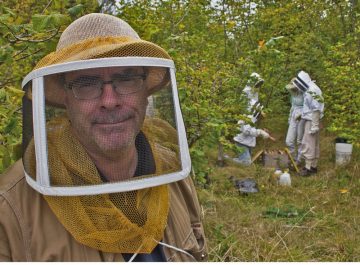
Brian became immersed in the rich and amazing world of bees while he and his four sons spent many a glorious day observing the curious activities of bees, noticing the bees’ consistent patterns, collective activities, and the surprising comparisons to our own human patterns and behaviours. He’s never looked back and today is a Certified Beemaster and beekeeper, heavily involved in food security issues in Richmond and the Lower Mainland. Brian guest lectures for Gaia College’s Growing Food in the City certificate program, for adult education at Van Dusen Gardens in Vancouver, for Kwantlen’s Richmond Farm School and teaches young people in the city about honey bees as well as native types. He is President of the Richmond Beekeepers Association, a BC Association Master Gardener, Sustainable Gardening and Bee Master to West Coast Seeds, and offers classes in grafting fruit trees, food preserving, and other farm skills.
Date and Time
DATE Wednesday, August 7th | 7:00 – 9:00 pm (2 hours)
Location
UBC Farm
3461 Ross Drive, Vancouver BC
Cost
$29 Standard ($25 Student) + GST
Register for this workshop
Plant structure and hydraulic function
Research Seminar
Cluster Hire in LFS Applied Biology, Sustainable Agriculture and the Environment, and CSFS at UBC Farm
Novel insights into the coupling of plant structure and hydraulic function: Implications for sustainable crop management
Dr. Thorsten Knipfer
Assistant Project Scientist
Department of Viticulture and Enology
University of California, Davis
Click here to fill out the Feedback Form for Dr. Thorsten Knipfer’s campus visit

Planning for climate change and making agricultural production more sustainable requires a holistic understanding of plant physiological responses across multiple scales. In this seminar, Dr. Knipfer will talk about his ongoing research using in-vivo approaches to study xylem stress physiology and the role of roots and leaves in protecting long-distance transport. Using X-ray computed microtomography, he will present novel insights into the coupling of vessel cavitation and discharge of stored xylem water and the mechanism of embolism repair in intact plants. Subsequently, he will talk about the impact of environmental stress on root structure and hydraulic function, and I will introduce how pressure-probe technology can help us measure these responses. I will conclude by emphasizing the importance of determining stress thresholds at the root, stem, and leaf level for understanding crop performance and developing sustainable management strategies in BC, and the need for high-throughput measurements of plant physiological responses.
When and Where?
- June 12, 2019 from 11:00 a.m. to 12:30 p.m.
- McLeod Building, Room 254
About the Presenter
Dr. Thorsten Knipfer, UC Davis
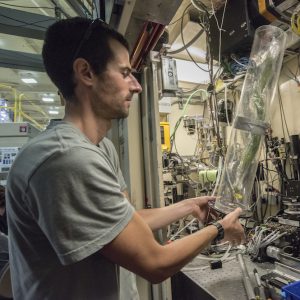
Dr. Thorsten Knipfer was born in Bavaria, Germany. In 2007, he completed his Diploma at the University of Bayreuth, Germany, working on water uptake of corn roots using pressure-probe technology. Thereafter, he moved to Dublin, Ireland, to start a PhD at the University College Dublin investigating the role of aquaporins in water uptake and their involvement in regulating whole-plant water flow in barley. In 2011, he started a PostDoc at the University of California, Davis, USA, together with Profs. Kenneth Shackel and Mark Matthews. During his research he investigated cellular water relations and water transport dynamics of grape berries. In 2013, he transitioned to Dr. Andrew McElrone’s lab at UC Davis to study xylem hydraulic function using X-ray computed microtomography. In his current position as Assistant Project Scientist at UC Davis, his work focuses on xylem stress physiology and the screening of walnut rootstocks for drought resistance.
This seminar is part of the LFS Applied Biology Faculty Cluster Hire in Sustainable Agriculture and the Environment. Nine short-listed candidates will be giving seminars in May and June as part of their intensive interview process. Click here see a full list of events.